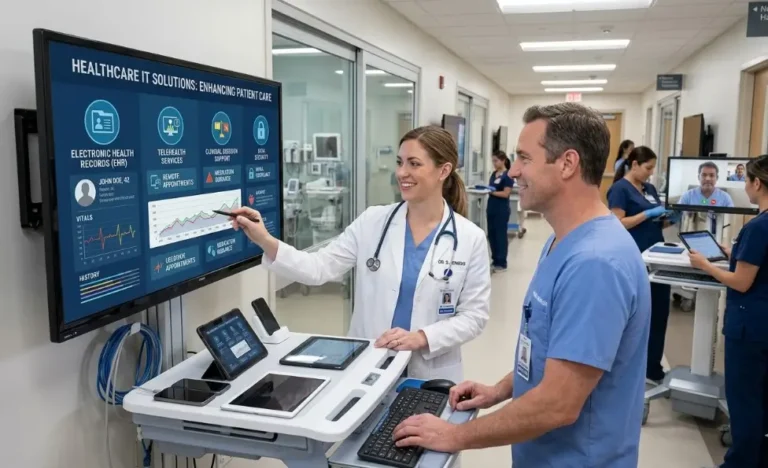
Hospitals now manage thousands of digital interactions every day. Patient records, imaging files, prescriptions, and insurance information move through complex systems that must work without interruption. When these systems fail or fail to connect, care slows down and risks increase.
Healthcare IT solutions solve this problem by connecting technology, medical staff, and patient data in a secure environment. They allow hospitals to access information instantly, coordinate departments, and protect sensitive health records.
The demand for reliable healthcare technology continues to grow. Research shows the global healthcare IT market may exceed 390 billion dollars by 2030, driven by digital health systems, analytics, and cybersecurity investments. Hospitals that invest in the right IT infrastructure gain better operational control and improve patient care outcomes.
This guide explains how healthcare IT solutions work, what systems hospitals use, and how healthcare organizations choose the right technology partner.
What Are Healthcare IT Solutions
Healthcare IT solutions are digital systems used to manage medical information, hospital operations, and communication between healthcare professionals. These technologies form the backbone of modern healthcare infrastructure.
Hospitals depend on integrated software platforms that store patient records, manage clinical workflows, and connect departments such as laboratories, imaging centers, and pharmacies. Instead of relying on manual paperwork or isolated systems, healthcare organizations now operate through centralized digital platforms.
These solutions combine cloud technology, specialized medical software, and secure data infrastructure to create a connected healthcare environment. Doctors can access patient histories instantly, nurses can track treatment progress, and administrators can manage hospital operations through a unified system.
The following table shows common components found in healthcare IT ecosystems.
| Component | Purpose |
|---|---|
| Electronic Health Records | Store and manage patient medical data |
| Hospital Information Systems | Manage clinical workflows and hospital operations |
| Clinical Decision Support | Assist doctors during diagnosis |
| Healthcare Analytics | Analyze medical and operational data |
| Telehealth Platforms | Provide remote consultations |
Each system plays a role in improving hospital efficiency and enabling faster decision making
Why Healthcare Organizations Need IT Solutions
Healthcare providers operate in one of the most data intensive industries in the world. A single hospital may generate terabytes of medical data every day through imaging systems, patient monitoring devices, and electronic records.
Without integrated IT infrastructure, this information becomes fragmented and difficult to manage. Doctors may struggle to access patient history quickly, while administrators face delays in billing, reporting, and coordination.
Healthcare IT solutions address these operational challenges by centralizing data and automating workflows. They help healthcare professionals access accurate information at the right time while reducing administrative burden.
The most common operational challenges healthcare organizations face include the following.
| Challenge | Impact on Healthcare Providers |
|---|---|
| Fragmented patient data | Delays treatment and diagnosis |
| Manual documentation | Creates administrative workload |
| Cybersecurity threats | Risk of data breaches |
| Poor interoperability | Systems cannot communicate effectively |
By addressing these issues, healthcare technology allows hospitals to focus more on patient care rather than administrative complexity.
Ideal Customer Profile for Healthcare IT Solutions
Healthcare IT services are typically designed for organizations that manage large volumes of medical data and require secure infrastructure.
Hospitals, healthcare networks, and multi location clinics rely heavily on integrated systems to coordinate patient care and maintain regulatory compliance. These organizations often invest heavily in technology modernization programs to improve efficiency and maintain competitive healthcare services.
The table below shows a typical customer profile for healthcare IT services.
| Category | Details |
|---|---|
| Organization Type | Hospitals, healthcare systems, clinics |
| Employee Size | 100 to 10,000 employees |
| Decision Makers | CIO, CTO, CMIO, hospital administrators |
| Key Objectives | Improve patient care and operational efficiency |
| Main Challenges | Legacy systems, security threats, disconnected data |
| Investment Range | 50,000 to several million dollars |
These organizations seek IT partners who understand healthcare regulations, clinical workflows, and data security requirements.
Core Healthcare IT Systems Used in Hospitals
Hospitals operate through a network of specialized technology platforms designed to manage different aspects of patient care and administrative operations.
These systems must work together seamlessly to ensure healthcare professionals have access to accurate and timely information.
The most important hospital technology systems include the following.
| System | Function |
|---|---|
| Electronic Health Records | Maintain digital patient medical histories |
| PACS | Store and manage diagnostic imaging |
| Laboratory Information Systems | Manage lab tests and results |
| Revenue Cycle Management | Handle billing and insurance processing |
| Health Information Exchange | Share patient data across institutions |
Together these platforms form the technological backbone of modern healthcare institutions.
Types of Healthcare IT Solutions
Healthcare IT includes several categories of specialized technology that support patient care and hospital operations.
Electronic Health Record Systems
Electronic health records store patient histories, medications, allergies, and clinical notes in digital form. Physicians rely on these systems to access information quickly and coordinate treatment plans.
Popular EHR vendors include Epic Systems and Oracle Cerner, which power many hospital networks across the United States and require strong EHR integration.
Telemedicine Platforms
Telemedicine enables doctors to provide consultations remotely through secure video communication tools. This technology expanded rapidly during the pandemic and continues to improve healthcare access for rural communities.
Telehealth platforms reduce travel time for patients and allow doctors to monitor health conditions without requiring physical visits.
Healthcare Cloud Infrastructure
Cloud platforms allow healthcare organizations to store medical data securely while enabling collaboration across departments and locations. Cloud technology improves scalability and helps hospitals manage growing volumes of healthcare data while ensuring reliable data protection.
Medical Data Analytics
Healthcare analytics platforms analyze clinical and operational data to identify trends and improve decision making. Hospitals use analytics tools to predict patient risks, improve treatment outcomes, and optimize resource allocation.
Healthcare Cybersecurity Systems
Healthcare organizations are frequent targets for cyber attacks due to the value of medical data. Security platforms protect hospital networks through encryption, threat detection, and identity management systems.
Healthcare IT Architecture Explained
Healthcare technology relies on multiple layers of infrastructure that work together to deliver reliable and secure digital services.
These layers ensure patient data can move safely between systems while maintaining strict privacy controls.
| Layer | Function |
|---|---|
| Data Layer | Stores patient records and medical data |
| Integration Layer | Connects systems using APIs and standards |
| Application Layer | Clinical and administrative software |
| Security Layer | Protects data through encryption and monitoring |
Healthcare interoperability standards such as HL7 standards and FHIR allow different medical systems to exchange information safely. These standards enable hospitals to connect electronic health records, laboratory systems, and imaging platforms.
A well designed IT architecture ensures hospitals can scale operations while maintaining secure access to patient information.
Healthcare IT Security and HIPAA Compliance
Healthcare organizations must protect sensitive patient information while complying with strict privacy regulations.
In the United States, the Health Insurance Portability and Accountability Act establishes guidelines for safeguarding medical data. Hospitals must ensure that patient records remain confidential and protected through strong HIPAA compliance practices.
Modern healthcare security strategies involve multiple protective layers.
| Security Measure | Purpose |
|---|---|
| Data encryption | Protect medical information |
| Identity access control | Restrict system access |
| Network monitoring | Detect security threats |
| Compliance auditing | Maintain regulatory standards |
Effective cybersecurity programs help healthcare providers reduce the risk of data breaches and maintain patient trust.
Top Healthcare IT Companies in the USA
Several technology providers specialize in healthcare infrastructure and digital health systems.
| Company | Specialty |
|---|---|
| Epic Systems | Electronic health records |
| Oracle Cerner | Hospital software platforms |
| Siemens Healthineers | Medical imaging technology |
| CDW Healthcare | Healthcare IT infrastructure |
| ScienceSoft | Healthcare software development |
These companies provide technology solutions used by hospitals, clinics, and healthcare networks across the country.
Healthcare IT Implementation Process
Deploying healthcare technology requires careful planning and collaboration between technical teams and healthcare professionals.
Hospitals must evaluate existing infrastructure and identify gaps before implementing new systems.
A typical implementation process often includes medical system planning and device integration across hospital infrastructure:
1 infrastructure assessment
2 system architecture planning
3 compliance and security review
4 software integration with existing systems
5 deployment and testing
6 staff training and onboarding
7 ongoing monitoring and optimization
This structured approach helps healthcare organizations transition smoothly to new technology platforms.
Healthcare IT Implementation Cost
Healthcare IT projects vary significantly depending on the size of the organization and the complexity of the technology involved.
Smaller clinics often adopt cloud based systems with relatively modest implementation costs. Large hospital networks require extensive infrastructure investments and integration services.
| Organization Type | Typical Cost |
|---|---|
| Small clinics | 30k to 150k |
| Mid size hospitals | 200k to 1 million |
| Large healthcare systems | several million dollars |
Costs typically include system configuration, cybersecurity tools, data migration, and employee training.
How Healthcare Organizations Choose IT Providers
Selecting the right technology partner is one of the most important decisions healthcare leaders make. The right provider must understand clinical workflows, security requirements, and regulatory obligations.
Healthcare decision makers evaluate several factors when selecting IT partners.
| Factor | Why It Matters |
|---|---|
| Healthcare experience | Understanding clinical environments |
| Compliance expertise | Meeting regulatory requirements |
| Integration capability | Connecting existing systems |
| Cybersecurity expertise | Protecting patient data |
| Support services | Maintaining system stability |
Technology partners that specialize in healthcare environments often deliver more reliable and secure implementations.
Future Trends in Healthcare IT
Healthcare technology continues to evolve rapidly as new innovations emerge across the digital health ecosystem.
Artificial intelligence tools are helping physicians analyze diagnostic images and detect patterns in patient data. Predictive analytics platforms can identify potential health risks before symptoms appear.
Remote patient monitoring is also becoming more common. Wearable medical devices improve medical device connectivity and allow doctors to track patient health in real time.
Cloud computing and connected medical devices will continue transforming healthcare infrastructure in the coming years.
Hospitals that adopt advanced technology early can improve patient outcomes and streamline operational efficiency.
Frequently Asked Questions
Healthcare IT solutions are technology systems that help hospitals manage patient information, medical workflows, and communication between healthcare teams. These systems store medical records, support clinical decisions, and connect departments so doctors can access accurate data quickly and safely.
A healthcare IT technician maintains hospital technology systems and supports medical staff with technical issues. Their work includes managing networks, updating software, protecting patient data, and ensuring systems like EHR platforms and medical devices operate smoothly.
Common healthcare technologies include electronic health records, telemedicine platforms, medical imaging systems, and healthcare analytics tools. These systems help doctors store patient data, conduct remote consultations, analyze medical information, and improve treatment decisions
Healthcare IT is important because it improves patient safety and reduces medical errors. Doctors can access accurate patient records quickly, share information across departments, and make faster treatment decisions while maintaining secure and organized medical data.
Healthcare interoperability means different hospital systems can share and understand patient data across platforms. Standards such as HL7 and FHIR allow medical software, laboratories, and imaging systems to communicate so healthcare providers can access complete patient information.
Most healthcare IT systems take 3 to 12 months to implement depending on hospital size and system complexity. Smaller clinics can deploy cloud platforms faster. Large hospitals need more time for system integration, staff training, and compliance checks to ensure patient data remains secure.
Yes. Modern healthcare IT solutions are built to integrate with existing hospital systems such as EHR platforms, laboratory software, and imaging systems. Standards like HL7 and FHIR allow different technologies to communicate so hospitals do not need to replace their entire infrastructure.
Yes, when implemented properly. Reliable healthcare IT platforms include data encryption, access controls, monitoring systems, and secure backups. These protections help hospitals meet HIPAA compliance requirements and reduce the risk of cyberattacks or patient data breache
Conclusion
Healthcare technology has become the foundation of modern medical care. Hospitals rely on secure systems to manage patient records, coordinate treatment, and protect sensitive information. Without reliable IT infrastructure, healthcare operations become slow and vulnerable to errors. By investing in strong healthcare IT solutions, organizations improve patient safety, streamline hospital workflows, and support better medical outcomes.
As healthcare continues evolving, technology will remain one of the most powerful tools for improving care delivery across the United States.